
Julia Kristeva:
Julia Kristeva is a philosopher and psychoanalyst whose work explores language, identity, and the unconscious, introducing influential ideas such as abjection and the semiotic dimension of meaning.

The philosophy of language and linguistics is a branch of philosophy that explores the nature, structure, and functions of language, as well as the philosophical issues related to language and communication. It also examines the relationship between language and thought. Key aspects of the philosophy of language and linguistics include:
Meaning and Reference: Philosophers investigate how words, sentences, and linguistic expressions acquire meaning and refer to objects or concepts. This involves discussions about semantics, reference, and truth conditions.
Language and Thought: The philosophy of language explores the relationship between language and thought, considering whether language shapes thought or if thought is independent of language. Philosophers also examine the role of language in cognition.
Communication and Pragmatics: This area focuses on the study of language use in communication. It addresses issues related to implicature, speech acts, context, and conversational implicature. Philosophers explore how language conveys meaning beyond its literal content.
Semiotics: Semiotics is the study of signs and symbols in language and other forms of communication. Philosophers analyze the nature of signs, their interpretation, and their role in communication.
Linguistic Analysis: Philosophers engage in linguistic analysis to understand the structure of language, including syntax, morphology, and phonology. They investigate the grammar and rules that govern language use.
Linguistic Relativity: The philosophy of language examines the Sapir-Whorf hypothesis and linguistic relativity, considering whether language influences thought and cognition.
Meaning and Reference: Philosophers investigate how words, sentences, and linguistic expressions acquire meaning and refer to objects or concepts. This involves discussions about semantics, reference, and truth conditions.
Linguistic Realism vs. Anti-Realism: Debates exist about whether linguistic entities and structures, such as meanings and grammatical rules, have objective existence (linguistic realism) or are social constructs (linguistic anti-realism).
Philosophical Issues in Linguistics: The philosophy of language engages with philosophical issues raised by linguistics, such as the nature of linguistic universals, language acquisition, and language evolution.
Language and Culture: Philosophers explore the role of language in culture and society, considering how language reflects and influences cultural norms, identity, and social practices.
Pragmatics of Communication: This area of study investigates the role of pragmatics in communication, including the use of implicature, presupposition, and context in interpreting utterances.
Analytic Philosophy of Language: Analytic philosophers have made significant contributions to the philosophy of language, addressing issues related to meaning, reference, truth, and language analysis.
Philosophical Issues in Translation: Philosophers examine the philosophical challenges and implications of translation, including questions about linguistic equivalence, interpretation, and cross-cultural communication.
The philosophy of language and linguistics plays a fundamental role in understanding human communication, cognition, and the relationship between language and reality. It also contributes to broader philosophical inquiries into meaning, reference, truth, and the nature of human thought and expression.
Julia Kristeva is a philosopher and psychoanalyst whose work explores language, identity, and the unconscious, introducing influential ideas such as abjection and the semiotic dimension of meaning.
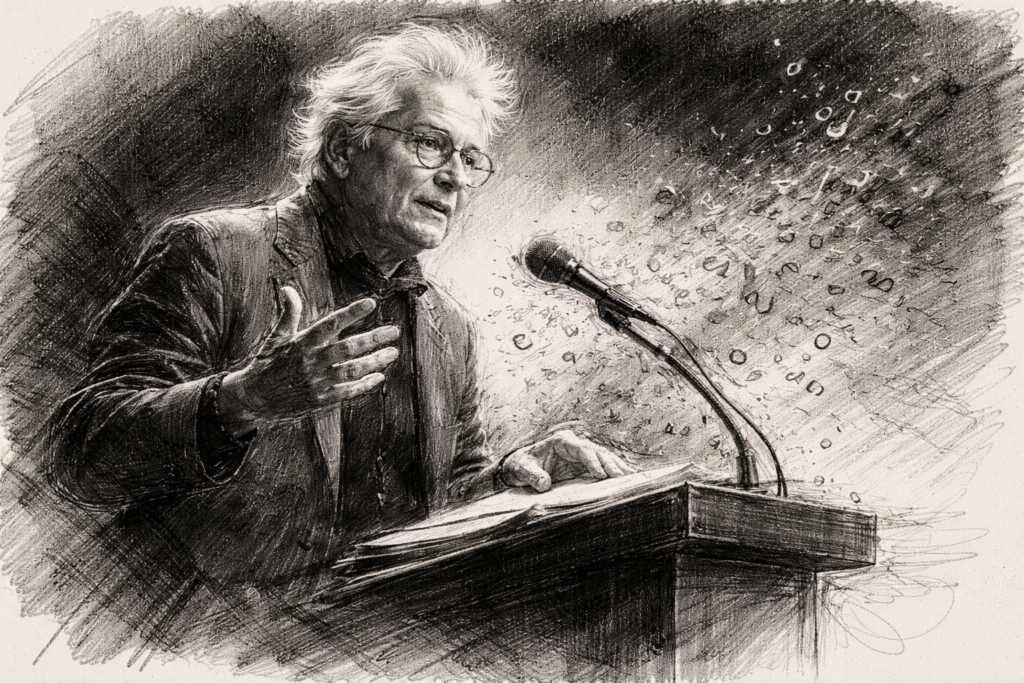
Jacques Derrida was a French philosopher best known for developing deconstruction, a way of reading texts that exposes hidden assumptions, hierarchies, and instabilities in language. His work reshaped philosophy, literature, law, and cultural theory by showing that meaning is never fixed, but always in motion.

Dewi Zephaniah Phillips was a Welsh philosopher whose work focused on religion, ethics, and the nature of meaning. Rejecting both dogmatic faith and militant scepticism, he argued that religious practices must be understood through the lived realities of human life rather than as claims that require scientific defence.

Elizabeth Anscombe, one of the most influential analytic philosophers of the twentieth century, transformed modern ethics and action theory through her work on intention, virtue, and moral reasoning. Drawing on Aristotle and Aquinas while engaging the legacy of Wittgenstein, she challenged the foundations of modern moral philosophy and helped revive virtue ethics as a central philosophical approach.

Discover Noam Chomsky’s influential work in linguistics and activism, inspiring critical thinking on power, control, and resistance across disciplines.

Explore Donald Davidson’s influence on 20th-century language, thought, and action. Learn about the Principle of Charity and Triangulation Argument in human communication and rationality.

Explore J L Austin’s speech act theory, where language becomes action. Learn how words shape reality and discover his profound insights on the power of language.

Explore the enigmatic world of Ludwig Wittgenstein, the titan of modern philosophy. His journey revolutionizes our understanding of language and thought, pushing the limits of words.

Discover the power of symbols and their influence on human thought with Ernst Cassirer. Explore how language, art, religion, and science shape reality and promote tolerance as an antidote to dogmatism.

Explore Gottlob Frege’s profound impact on language, math, and computer science, revolutionizing logic and philosophy, leaving an indelible mark on intellectual landscape.