
Julia Kristeva:
Julia Kristeva is a philosopher and psychoanalyst whose work explores language, identity, and the unconscious, introducing influential ideas such as abjection and the semiotic dimension of meaning.

Level 2 – Basic Concepts: At this level, you’ll explore fundamental philosophical concepts and theories. It’s designed for those with some understanding of philosophy, explaining ideas in a straightforward way, with examples to illustrate key points.
Julia Kristeva is a philosopher and psychoanalyst whose work explores language, identity, and the unconscious, introducing influential ideas such as abjection and the semiotic dimension of meaning.

Patricia Churchland is a pioneering neurophilosopher whose work connects philosophy of mind, neuroscience, and morality, arguing that understanding the brain is essential to understanding ourselves.

Angela Davis is a philosopher and activist whose work explores race, feminism, capitalism, and prison abolition, arguing for collective liberation and a radical rethinking of justice.

Nancy Fraser is a leading political philosopher whose work explores social justice through the lenses of redistribution, recognition, and democratic participation, offering a powerful critique of capitalism, feminism, and identity politics in the modern world.
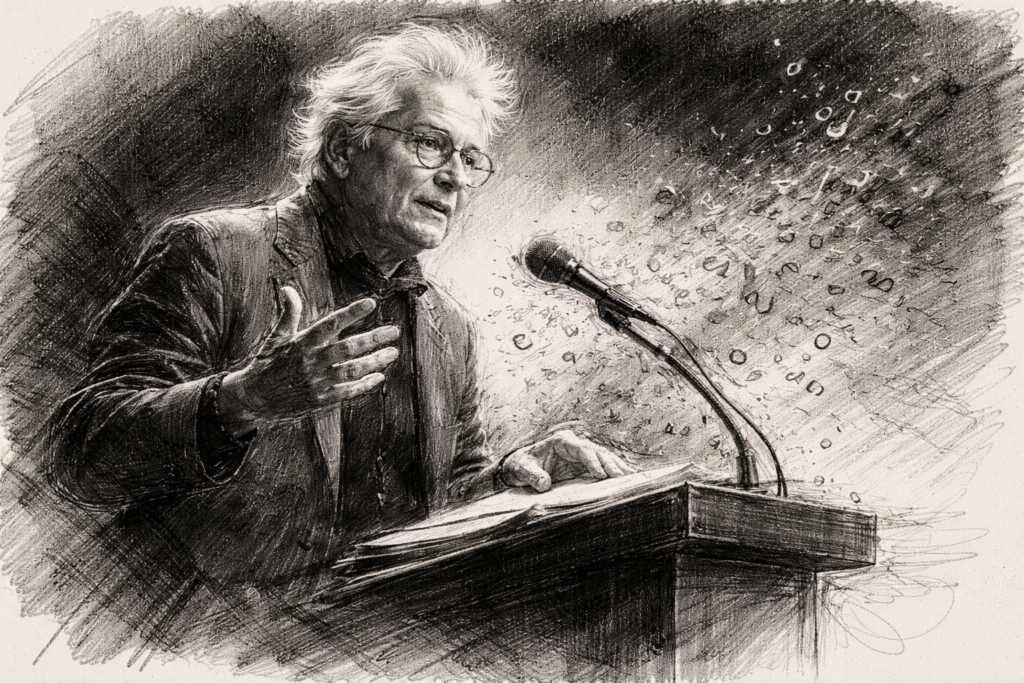
Jacques Derrida was a French philosopher best known for developing deconstruction, a way of reading texts that exposes hidden assumptions, hierarchies, and instabilities in language. His work reshaped philosophy, literature, law, and cultural theory by showing that meaning is never fixed, but always in motion.

Luce Irigaray is a Belgian-born philosopher and feminist theorist whose work examines how language, culture, and philosophy construct gender. Her writing challenges the idea that the masculine is the default form of human experience, arguing instead for a world where difference between genders is recognised without hierarchy.

Dewi Zephaniah Phillips was a Welsh philosopher whose work focused on religion, ethics, and the nature of meaning. Rejecting both dogmatic faith and militant scepticism, he argued that religious practices must be understood through the lived realities of human life rather than as claims that require scientific defence.

Cressida J. Heyes argues that identity is shaped through social forces, personal discipline, and systems of power. Her work on the self, gender, and transformation challenges the idea of identity as something inner and fixed, and instead explores how we are continually trained to become ourselves.

Jean Baudrillard argued that modern society has replaced reality with simulations that no longer refer to anything real. This essay explores simulacra, hyperreality, media culture, and why Baudrillard’s ideas feel disturbingly accurate in the age of AI.

Philip K. Dick probed the instability of reality, identity, and agency through unsettling speculative stories. His novels remain influential across philosophy, psychology, and emerging AI ethics. This article explores how Dick’s recurring themes connect to his life and our contemporary technological anxieties.