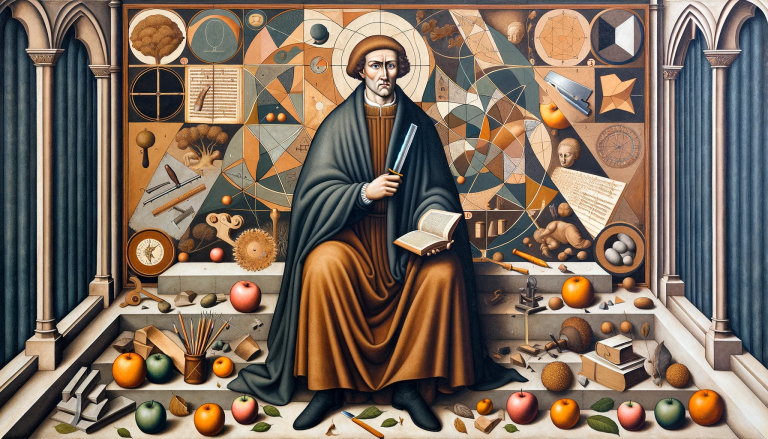
A Life Rooted in Ordinary Beginnings
Jesus of Nazareth, known to the world as Christ, is arguably the most influential figure in human history. To billions of Christians, he is the Son of God and Saviour. To historians, he is a Jewish teacher who lived in first-century Palestine, a time of political unrest under Roman rule. To philosophers and secular thinkers, he is a moral voice whose ideas have shaped Western culture for two millennia.
What makes his story compelling is that it begins in obscurity. Born in Bethlehem and raised in Nazareth, the Gospels describe him as the child of Mary, whose life was marked by both poverty and promise. His earliest years are framed in paradox: a humble carpenter’s son proclaimed by shepherds and magi as someone extraordinary.
The Teacher and the Message
 When Jesus began his public ministry around the age of thirty, he stepped into the role of a rabbi, but one who taught in ways that confounded expectations. He spoke not in scholarly riddles, but in parables: simple stories about seeds, sheep, and neighbours that carried profound truths. His teaching centred on the Kingdom of God, not as a distant political power but as a present reality marked by compassion, justice, and radical love.
He welcomed outsiders, ate with tax collectors, touched lepers, and dignified women in ways unusual for the time. His Sermon on the Mount turned conventional wisdom upside down: the poor, the meek, the merciful were declared “blessed,” while love for enemies was raised as the highest command. Whether read as divine revelation or moral teaching, his words became a foundation for ethical reflection across centuries.
 Conflict, Trial, and Crucifixion
Such a message was not without cost. To the Roman authorities, Jesus was a potential threat — a preacher stirring crowds in a volatile province. To some religious leaders, he was a dangerous reformer, challenging traditions and authority.
The Gospels narrate the final week of his life in Jerusalem as a collision between hope and hostility: welcomed by cheering crowds one day, betrayed and arrested the next. Tried by both Jewish and Roman authorities, Jesus was condemned to death by crucifixion — a punishment reserved for rebels and criminals. His death was brutal, yet it became the heart of Christian faith: the belief that through sacrifice came redemption.
Resurrection and the Birth of a Movement
Christians hold that three days after his death, Jesus rose from the tomb. This claim, central to Christianity, turned despair into conviction. His followers, once scattered and fearful, became bold witnesses, proclaiming him not only as teacher and prophet but as the risen Christ.
Whether one views the Resurrection as miracle or metaphor, the historical fact remains: from a small group of disciples grew a movement that spread across the Roman Empire and, eventually, the world. Within a few centuries, Christianity had reshaped philosophy, art, law, and politics.
Why Christ Still Speaks Today
Jesus Christ is claimed by many and contested by many, yet his influence is inescapable. For Christians, he is the eternal Son of God whose life, death, and resurrection bring salvation. For Muslims, he is Isa, a prophet born of a virgin, revered though not divine. For secular thinkers, he stands as an ethical figure whose call to love one’s neighbour, forgive enemies, and care for the vulnerable still challenges societies built on competition and power.
His story has inspired movements for justice, from abolition to civil rights. His teachings continue to provoke debate on morality, politics, and human dignity. In art, music, and literature, his image is woven into the fabric of Western imagination.
What makes Christ’s story enduring is not simply the claim of divinity, but the way his life brings together extremes: humility and authority, sacrifice and victory, humanity and transcendence.
A Legacy Beyond Time
Jesus of Nazareth lived barely three decades, yet his influence has spanned two thousand years. His words remain among the most quoted in history; his story, retold endlessly in churches, books, films, and songs, still sparks both devotion and debate.
Whether one approaches him as the Christ of faith, the prophet of Islam, the teacher of ethics, or the revolutionary figure of history, one thing is clear: his life cannot be ignored. In his teachings, in his death, and in the hope of his resurrection, he left a legacy that continues to shape hearts, cultures, and nations.
Further Reading & Resources
Books
-
The New Testament – Primary source of Christ’s life and teachings.
-
Bart D. Ehrman, Jesus: Apocalyptic Prophet of the New Millennium (Oxford University Press, 1999).
-
N.T. Wright, Simply Jesus: A New Vision of Who He Was, What He Did, and Why He Matters (HarperOne, 2011).
-
Geza Vermes, Jesus the Jew: A Historian’s Reading of the Gospels (Fortress Press, 1981).
-
Rowan Williams, Christ the Heart of Creation (Bloomsbury, 2018).
Online Resources
-
Wikipedia – Jesus – Comprehensive overview with historical and theological perspectives.
-
BBC Religions – Who Was Jesus? – Accessible introduction to his life and significance.
-
Jewish Virtual Library – Jesus – Jewish perspectives on his role and impact.
-
Britannica – Jesus – Encyclopaedia entry with historical context.
-
Al-Islam.org – Jesus in Islam – Islamic view of Isa (Jesus).
-
Stanford Encyclopedia of Philosophy – Philosophy and Christian Theology – Mentions of Christ in philosophical discourse.
Image Attribution:
Pietro Perugino, Public domain, via Wikimedia Commons