
 Protagoras (c. 490–420 BCE) was one of the most celebrated Sophists of ancient Greece. Born in Abdera (the same city as Democritus), he became a travelling teacher, admired for his rhetorical skill and his ability to train citizens in the art of persuasion. Unlike Plato and Aristotle, who sought objective truths about the cosmos and ethics, Protagoras leaned towards relativism — focusing on how truth, morality, and justice looked from the standpoint of human beings themselves.
“Man is the measure of all things”
This famous line is at the core of his philosophy. To Protagoras, truth was not absolute, but dependent on the individual. What feels cold to one person may feel warm to another — both are correct, because truth is defined by perception. In moral and political terms, this meant that laws, customs, and beliefs are not grounded in the gods or in nature, but in human communities.
It was a radical shift: morality became less about discovering eternal truths and more about negotiating shared perspectives. In democratic Athens, where persuasion in the assembly mattered as much as justice in the courts, this was both powerful and unsettling.
Doubt about the gods
Protagoras also made waves with his statement about religion:
“Concerning the gods, I have no means of knowing whether they exist or not, or of what sort they may be.”
This was one of the earliest recorded expressions of agnosticism. Unfortunately, it also sparked outrage. According to later reports, his books were publicly burned, and he was banished from Athens — a reminder that free thought had limits even in the birthplace of democracy.
The Sophist’s craft
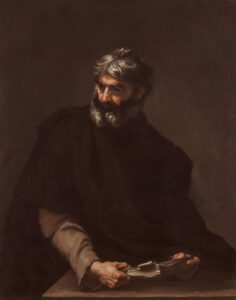 Protagoras wasn’t just a philosopher; he was a professional teacher. The Sophists trained young men in rhetoric, debate, and civic life. To critics like Plato, this meant they cared more about winning arguments than about discovering truth. To supporters, it meant they prepared citizens for the realities of political life.
Protagoras is credited with teaching debate in a structured way, even introducing exercises where students would argue both sides of a question. This method still echoes in today’s legal training and debating societies.
Influence and legacy
Plato and Aristotle dismissed Protagoras as dangerously relativistic, but his influence never disappeared. Modern thinkers often see him as a precursor to:
- Relativism in philosophy: The idea that truth depends on perspective.
- Pragmatism: The view that ideas are judged by how they work in practice.
- Liberal thought: Questioning the authority of tradition and grounding society in human needs rather than divine command.
His challenge to absolute truths continues to resonate in debates over cultural relativism, human rights, and the nature of morality.
Parallels with Eastern thought
When placed alongside Chinese philosophers of the same period, Protagoras adds a fascinating contrast. While Confucius and Mencius spoke of harmony, ritual, and moral cultivation, and Mozi of universal love, Protagoras turned inward to the individual human perspective. His relativism feels like an inversion of Xunzi’s emphasis on discipline and external order. The Warring States philosophers sought stability through law or virtue; Protagoras suggested that truth itself shifts according to who perceives it.
This parallel shows how different cultures wrestled with the same questions: Is morality grounded in something higher — Heaven, the Dao, or natural law — or is it a human construct negotiated in society? In China, the balance leaned toward cosmic or social order; in Athens, Protagoras dared to make humanity itself the measure.
Further Reading
- Plato, Theaetetus and Protagoras (dialogues featuring Protagoras)
- W.K.C. Guthrie, The Sophists
- George Grote, History of Greece (classic 19th-century account)
- Internet Encyclopedia of Philosophy: Protagoras
- Stanford Encyclopedia of Philosophy: Protagoras
- Wikipedia: Protagoras
Image Attribution:
Jusepe de Ribera, Public domain, via Wikimedia Commons


