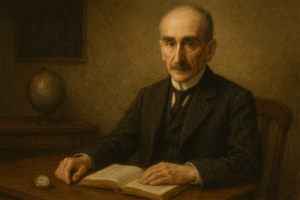
Gorgias of Leontini (c. 485–380 BCE) was one of the most famous Sophists of classical Greece and is often remembered as a kind of magician with language. A native of Sicily, he travelled widely as a teacher and orator, dazzling audiences with his style and showmanship. His speeches were so finely crafted that even hostile critics admitted their hypnotic effect. For Gorgias, rhetoric wasn’t just a tool — it was an art form capable of stirring emotions, shaping perceptions, and bending reality itself.
Unlike philosophers who searched for absolute truths, Gorgias leaned into the power of persuasion. In fact, he famously argued that nothing truly exists, and even if it did, humans couldn’t know it, and even if they knew it, they couldn’t communicate it. This extreme scepticism turned the focus away from metaphysical certainty and towards the sheer performance of language. Words, for Gorgias, had the force of a drug: they could intoxicate, heal, inspire, or deceive.
Rhetoric as Power
Gorgias elevated rhetoric to a kind of weapon. In his Encomium of Helen, he defended the much-maligned Helen of Troy by showing that, through rhetoric, even the “unforgivable” can be made forgivable. Whether Helen acted through divine compulsion, love, persuasion, or fate, Gorgias argued, she should not be blamed. The point was less about Helen herself and more about the astonishing ability of language to transform judgement.
The Sophist’s Reputation
Critics like Plato often presented Gorgias as a sophist who cared more for winning arguments than pursuing truth. In Plato’s dialogue Gorgias, he is depicted as charming yet evasive, embodying the tension between rhetoric as art and philosophy as truth-seeking. Yet, for all the criticism, Gorgias’ influence can still be felt in traditions of rhetoric, performance, and even modern media, where persuasion often outweighs fact.
Further Reading
- Gorgias, Encomium of Helen (primary text)
- Plato, Gorgias (dialogue critiquing rhetoric)
- George A. Kennedy, The Art of Persuasion in Greece
- Eric A. Havelock, The Liberal Temper in Greek Politics
- Internet Encyclopedia of Philosophy: Gorgias
- Wikipedia: Gorgias