

In the waning centuries of the Islamic Golden Age, when the House of Wisdom had dimmed and the Mongol Empire was reshaping the world, one man quietly advanced a revolution, not with politics or poetry, but with a heartbeat.
Ala al-Din Abu al-Hasan Ali ibn Abi al-Hazm al-Qurashi al-Dimashqi, known to history as Ibn al-Nafis, was a physician, philosopher, and visionary who overturned centuries of medical dogma. Born in Damascus in 1213 CE and later working in Cairo, he became the first person to correctly describe pulmonary circulation, how blood travels from the heart to the lungs and back again.
But Ibn al-Nafis was more than a medical pioneer. He was a philosopher of reason and evidence, a thinker who believed that the human body was not a mystery to be feared, but a design to be understood. His work fused observation with imagination — and in doing so, bridged the gap between science and the soul.
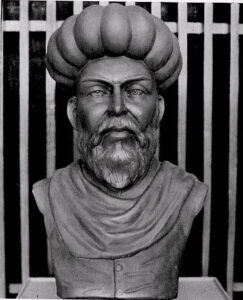 Philosophical Outlook and Key Works
Educated in Damascus under the influence of Ibn Sina (Avicenna) and other great physicians of the era, Ibn al-Nafis absorbed the classical Greek and Islamic traditions — then proceeded to challenge them. His philosophical outlook was grounded in rational empiricism: the idea that reason and experience together reveal truth, while blind acceptance of authority leads only to error.
His major works include:
-
Sharh Tashrīḥ al-Qānūn (Commentary on the Anatomy of Avicenna’s Canon), in which he challenged Galen’s and Avicenna’s teachings on the movement of blood, introducing his own revolutionary theory of pulmonary circulation.
-
Al-Mujaz fi al-Tibb (A Summary of Medicine), a concise medical encyclopedia covering diagnosis, anatomy, and physiology.
-
Al-Risalah al-Kamiliyyah fi al-Sira al-Nabawiyyah (Theologus Autodidactus), a philosophical novel exploring creation, the soul, and resurrection through reason and observation, considered by some to be the first true science fiction story in history.
In both science and philosophy, Ibn al-Nafis was fearless. He revered tradition but refused to let it dictate his conclusions. “Truth,” he believed, “must be observed, not inherited.”
Main Ideas and Contributions
1. The Discovery of Pulmonary Circulation
For over a millennium, physicians followed Galen’s theory that blood passed through invisible pores in the heart’s septum, moving from the right ventricle to the left. Ibn al-Nafis found this explanation illogical and unsupported by observation.
Through meticulous dissection and reasoning, he concluded that:
-
Blood flows from the right ventricle to the lungs,
-
It is purified by contact with air,
-
Then returns to the left ventricle before being pumped throughout the body.
He correctly described the pulmonary circulation of the blood, a discovery that would not be recognised in Europe until William Harvey’s work in the 17th century — over 300 years later.
But for Ibn al-Nafis, this was not merely a medical insight. It was a philosophical act: a demonstration that truth reveals itself to those who look carefully — not to those who repeat what others have said.
2. The Ethics of Inquiry
Ibn al-Nafis held that knowledge carried ethical responsibility. He viewed science as a moral pursuit — one that demanded honesty, humility, and compassion. In medicine, he argued that understanding the body was an act of respect for the Creator’s design.
He wrote, “To learn is to serve,” suggesting that knowledge should not elevate the scholar but benefit the community. This ethos linked him with thinkers like Al-Zahrawi and Al-Razi, whose humanism shaped the moral foundations of Islamic medicine.
3. Philosophy and the Soul
In Theologus Autodidactus, Ibn al-Nafis presented a remarkable vision of reason-based theology. The story follows a boy raised on a deserted island who, through pure logic and observation, deduces the existence of God, the immortality of the soul, and the structure of the cosmos.
This allegorical narrative prefigures the Enlightenment ideal of reason as revelation. It also explores resurrection and life after death in terms of biological possibility, a daring attempt to reconcile theology with anatomy and physics.
Through this, Ibn al-Nafis united faith and reason, science and story, showing that philosophy could live as much in imagination as in logic.
Influence and Legacy
Ibn al-Nafis’s influence was profound but slow to be recognised. His manuscripts circulated quietly in the Arab world, but his discoveries were largely unknown in Europe until the 20th century. When rediscovered in 1924 by the Egyptian physician Muhyo al-Deen al-Tatawi, his works reshaped the history of medicine.
Yet even in his own time, Ibn al-Nafis was revered as a scholar of immense range. He taught at the Nasiri Hospital in Cairo, where he trained students in anatomy, ethics, and philosophy. His integrated approach, viewing medicine as a discipline of both body and mind, anticipated modern holistic medicine by centuries.
His philosophical legacy, too, extends beyond medicine. In his writings, he argued that reason complements faith, not contradicts it. His vision of knowledge as a moral and spiritual duty remains one of the clearest articulations of Islamic humanism.
Relevance and Influence Today
In the 21st century, Ibn al-Nafis stands as a model for how science and philosophy can coexist. His methods prefigure the modern scientific process: observation, hypothesis, and verification. But he also reminds us that knowledge divorced from compassion becomes sterile.
His work invites reflection on the nature of discovery itself. Science, he teaches, is not only about uncovering new facts but about seeing old truths more clearly. His moral vision, that understanding the body is inseparable from respecting life, resonates deeply in today’s debates about medical ethics, bioengineering, and the boundaries of science.
In a time when many see reason and faith as opposites, Ibn al-Nafis offers a bridge between them: a belief that curiosity, guided by humility, leads to both wisdom and wonder.
Further Reading
- Ibn al-Nafis, Commentary on the Anatomy of Avicenna’s Canon
- Ibn al-Nafis, Theologus Autodidactus (translated editions)
- Jim Al-Khalili, Pathfinders: The Golden Age of Arabic Science
- A. Meyerhof, “Ibn al-Nafis and the Discovery of the Pulmonary Circulation” (Isis, 1935)
- Wikipedia: Ibn al-Nafis
See also:




_(cropped).jpg)