

Donna Haraway is a pivotal figure in contemporary thought, reshaping how scholars understand technology, identity, nature, and knowledge itself.
A philosopher of science, feminist theorist, and cultural critic, Haraway challenges some of the most deeply-embedded assumptions in Western intellectual history.
Her writing is not merely theoretical. It disrupts. It asks readers to sit with complexity, to resist easy categories, and to imagine alternative ways of becoming in a world shared with countless other lives and systems — digital, biological, and ecological.
Haraway’s influence spans feminist philosophy, anthropology, technology studies, media theory, and environmental humanities. And yet her questions are profoundly universal:
What counts as knowledge? Who counts as a subject? Where do humans end and technologies begin? How do we live ethically in a shared planetary future?
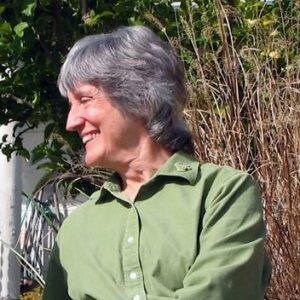 Biography
Born in 1944 in Denver, Colorado, Haraway trained first in the sciences — studying Zoology, English Literature, and Philosophy before completing a PhD in Biology at Yale.
This grounding in biological science is essential to understanding her later work. Haraway is not critiquing science from the outside; she interrogates scientific culture from deep within its practices and assumptions.
Her academic career blossomed at the University of California, Santa Cruz, where she became renowned in the History of Consciousness programme and later in Feminist Studies. Here, she built her transdisciplinary approach: science understood as culture, culture understood as biology, and both understood as stories we tell about the world.
Key Ideas and Philosophical Contributions
The Cyborg: Beyond Human and Machine
Haraway’s essay A Cyborg Manifesto (1985) remains electrifying decades later. The cyborg — part human, part machine — is not simply a science-fiction trope. It is a philosophical tool that destabilises dualisms:
- human / animal
- human / machine
- male / female
- nature / culture
- physical / digital
- biological / technological
For Haraway, these boundaries were always porous; technology merely exposes the illusion of purity.
In a world of prosthetics, neural interfaces, artificial intelligence, online identities, and algorithmic decision-making, the cyborg is not hypothetical — it is already here. Haraway invites a future in which identity and agency are fluid, hybrid, and constructed through connections rather than essences.
This is not dystopian or utopian — it is post-binary. Haraway resists tidy narratives; she argues for staying with the messy middle.
Situated Knowledge: Accountability in Knowing
In Situated Knowledges (1988), Haraway dismantles the myth of objective, God-like scientific neutrality.
Knowledge, she argues, is always:
- situated
- embodied
- shaped by perspective
- influenced by power
This does not deny truth or rigour — it strengthens them. Haraway proposes a “strong objectivity” rooted in acknowledging one’s position, rather than claiming detachment.
Knowledge without accountability becomes ideology.
Knowledge with awareness becomes ethically grounded understanding.
Living with Others: Making Kin in a Shared World
Haraway’s later works shift from technology to ecology and multispecies life.
In Staying With the Trouble (2016), she proposes “making kin” — forging relationships across species and systems, recognising interconnectedness.
The future, she argues, cannot be solved by fantasies of escape — whether technological salvation or ecological nostalgia. Instead, humans must remain in the thick of reality, collaborating with nonhuman life and accepting interdependence.
The idea is not to dominate or romanticise nature but to co-become with it.
Ethics begins in entanglement, not separation.
Why Haraway Matters
Haraway’s work resonates because it confronts questions shaping contemporary life:
What is a human in a world of machines? AI, prosthetics, robotics, genetic engineering — the line between human and machine is dissolving. Haraway’s cyborg offers a conceptual vocabulary for navigating this transformation.
Can science be ethical without reflexivity? Haraway challenges scientific communities to confront their own cultural constructions and power dynamics — a foundational insight in science and technology studies.
How do we live in the Anthropocene? Environmental crises force humanity to rethink its place in ecosystems. Haraway’s multispecies ethics extends responsibility beyond the human.
How do we handle ambiguity? Her work insists on resisting simple answers. In a world hungry for certainty, she proposes intellectual courage through complexity.
Criticisms and Debates
Haraway’s writing is famously dense and metaphor-rich, which some critics argue limits accessibility. Others argue her refusal to offer clear prescriptions can frustrate practical application.
However, supporters view this as a strength: Haraway does not present a doctrine; she cultivates a framework for thinking. She encourages readers to interrogate assumptions and generate their own modes of ethical engagement.
Her philosophy is process, not proclamation.
Reading List
Works by Haraway
- A Cyborg Manifesto (1985)
- Primate Visions (1989)
- Modest_Witness@Second_Millennium (1997)
- The Companion Species Manifesto (2003)
- Staying with the Trouble (2016)
Recommended Secondary Reading
- N. Katherine Hayles — How We Became Posthuman
- Rosi Braidotti — The Posthuman
- Contemporary essays on posthumanism and feminist technoscience
Further Exploration (External Sources)
- Wikipedia – Donna Haraway
- Stanford Encyclopedia of Philosophy – Donna Haraway
- Encyclopaedia Britannica – Donna Haraway
- “A Cyborg Manifesto” – Full Text (PDF / archive copy)
(Alternate archive if needed) - Interview — The Guardian: “Donna Haraway on cyborgs, feminism, and post-truth worlds”
Image Attribution
Rusten Hogness, CC BY-SA 3.0, via Wikimedia Commons




.jpg)