


Plutarch (0040-120 AD): The Moralist Who Made Heroes Human
Plutarch turned biography into moral philosophy. By comparing the lives of Greece’s and Rome’s greatest figures, he explored not power, but character — and taught that virtue defines true greatness.

Cicero (-106-43 BCE): The Voice That Tried to Save Rome
Cicero brought philosophy into public life, championing reason, justice, and moral duty during Rome’s decline. His eloquence couldn’t save the Republic, but his ideas helped shape the modern world.

Michel de Montaigne (1533-1592): The Philosopher Who Invented the Self
Michel de Montaigne turned self-reflection into an art form. His Essays explored what it means to be human — uncertain, curious, and contradictory — and in doing so, he practically invented the modern self.
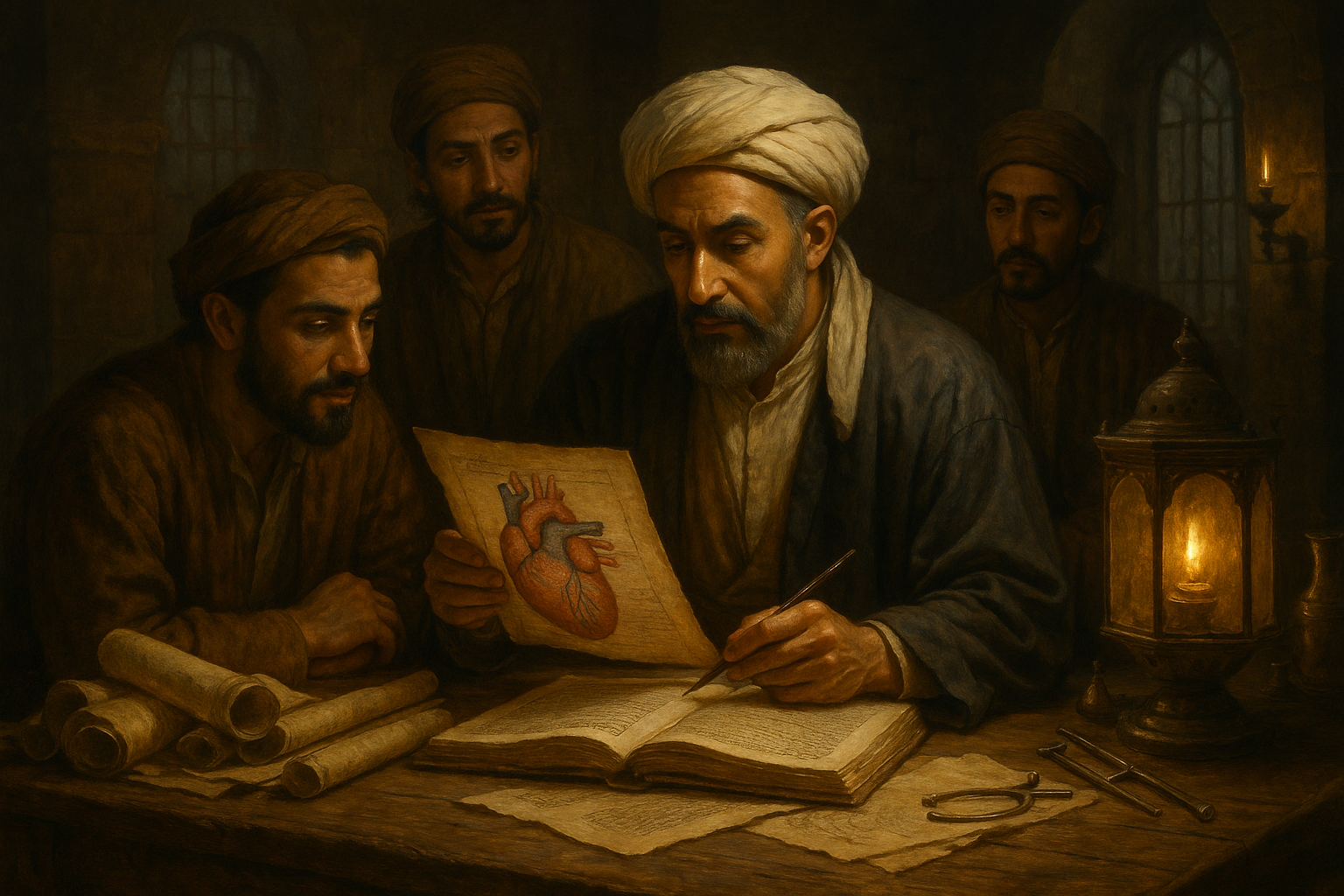
Ibn al-Nafis (c. 1210-1288): Where Science Meets the Soul
Scholar, scientist, and seeker of truth, Al-Biruni explored the cosmos with instruments in hand and humility in heart. From calculating the Earth’s circumference to comparing the beliefs of nations, he pursued knowledge that transcended boundaries. Guided by reason and respect, he measured not only the ...

Al-Biruni (973–1050 CE): The Measure of All Things
Scholar, scientist, and seeker of truth, Al-Biruni explored the cosmos with instruments in hand and humility in heart. From calculating the Earth’s circumference to comparing the beliefs of nations, he pursued knowledge that transcended boundaries. Guided by reason and respect, he measured not only the ...

Omar Khayyam (1048–1131): The Poet Who Measured Eternity
Mathematician, astronomer, and poet, Omar Khayyam measured the heavens with reason and questioned life with rhyme. In his equations he found order; in his verses, uncertainty. His Rubáiyát mused on fate and the fleeting nature of joy, while his scientific works redefined algebra and timekeeping. ...

Ismail al-Jazari (1136–1206 CE): The Father of Robotics
In the twelfth century, Ismail al-Jazari turned metal, water, and wood into poetry in motion. His ingenious machines — from the majestic Elephant Clock to lifelike automata and water-raising pumps — fused art and engineering in ways that still astonish. Blending precision with playfulness, he ...

Ibn al-Haytham (965–1040 CE): the Birth of the Scientific Method
A thousand years before the scientific revolution, Ibn al-Haytham peered into a darkened room and changed how humanity sees. Known in the West as Alhazen, he proved that light enters the eye — and with it, the foundations of the modern scientific method. His experiments ...
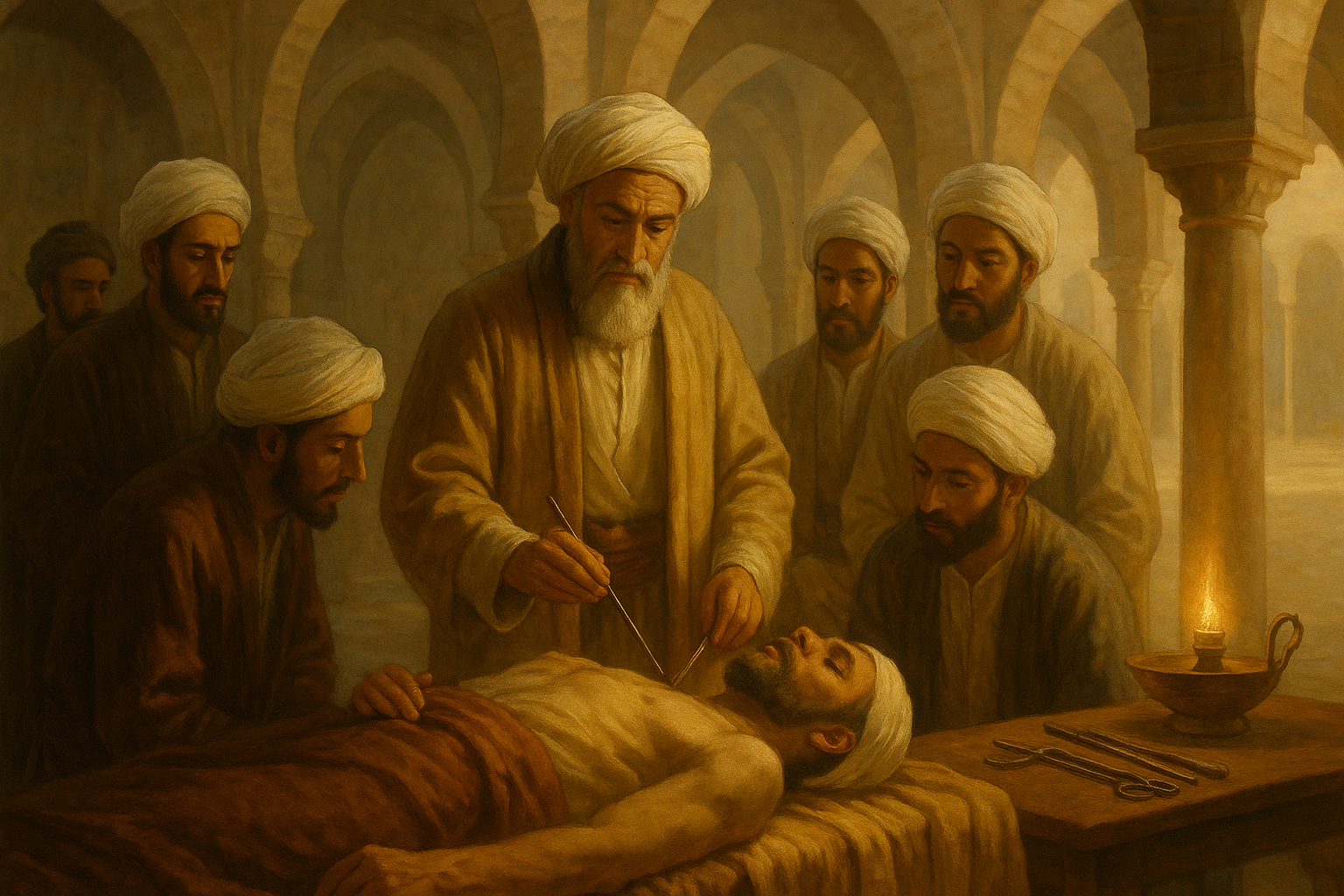
Al-Zahrawi (936–1013 CE): The Surgeon Who Made Medicine an Art
In the heart of 10th-century Córdoba, Al-Zahrawi transformed surgery from a craft into a science and from a science into an art. Known in the West as Albucasis, he combined precision with compassion, designing surgical instruments and ethical principles that shaped medicine for centuries. His ...

Abu Bakr al-Razi (864-935 AD): The Rational Healer of the Golden Age
Abu Bakr al-Razi was one of the most remarkable thinkers of the Islamic Golden Age — a physician, philosopher, and sceptic who believed reason was the truest expression of faith. In an era bound by tradition, he insisted that truth must be tested, not merely ...


