
 From prodigy to professor
Colin Maclaurin was born in February 1698 in the quiet parish of Kilmodan, Argyll. His father, a minister, died before he was two months old, and his mother passed away when he was nine. Raised by his uncle, the Reverend Daniel Maclaurin, the young Colin displayed an astonishing gift for mathematics. By the age of eleven, he entered the University of Glasgow, and at fourteen he graduated with an MA after defending a thesis on the power of gravity — an impressive feat even in an era fond of youthful prodigies.
At nineteen, he became Professor of Mathematics at Marischal College, Aberdeen, one of the youngest professors in the history of British academia. His precocity caught the attention of none other than Isaac Newton, who later supported his appointment at the University of Edinburgh. It was there that Maclaurin’s genius flourished.
Behind the mathematical precision and Newtonian rigor, Colin Maclaurin was remembered as a man of warmth, humility, and quiet determination. Those who knew him described a modest figure, deeply absorbed in his work yet kind in his dealings with others. Though he possessed a formidable intellect, he showed no trace of arrogance. In his lectures at Edinburgh, he was known to say that if a student failed to grasp a concept, the fault lay with the teacher, not the pupil. That humility, rare among the brilliant, made him both respected and loved.
Maclaurin’s manner was thoughtful and restrained — more the reflective scholar than the flamboyant orator. Yet he had a dry wit and a genuine curiosity that extended beyond mathematics. He was fascinated by natural philosophy, astronomy, and even the moral questions of his age. Friends recalled that he could speak on geometry and grace with equal ease.
Away from the lecture hall, he lived a relatively simple life. His marriage to Anne Stewart in 1733 brought him happiness and stability, and their home became a gathering place for students and scholars alike. Despite the heavy demands of his profession, he was devoted to his family, often seen walking with his children through the streets of Edinburgh.
In many ways, Maclaurin embodied the ideal of the Scottish Enlightenment before the term had even taken root — rational yet humane, rigorous yet moral. He believed that intellect carried with it a duty: to teach, to serve, and to better the world through understanding. His life was short, but it was one of integrity, purpose, and intellectual grace.
Colin Maclaurin’s character was inseparable from his mathematics. His even temperament and sense of fairness echoed in the balance and symmetry of his ideas. He sought harmony — between reason and intuition, geometry and calculus, theory and the tangible world. His approach to teaching and research showed a mind that valued not just discovery, but clarity. In a time when science was often the domain of the elite, Maclaurin made it accessible and respectable within the moral framework of Scottish society.
Philosophically, he stood at the intersection of logic and faith — a Newtonian who believed that the mathematical order of the universe hinted at divine intelligence. Yet, unlike some of his contemporaries, he treated such belief not as dogma but as inspiration for further inquiry. That outlook would influence a generation of Scottish thinkers who followed — men like David Hume, Adam Smith, and Thomas Reid — who each, in their own way, wrestled with the tension between reason and morality that Maclaurin had quietly exemplified.
His students and colleagues remembered not just a mathematician, but a mentor and moral compass. Through him, the abstract world of fluxions and curves became a reflection of the ordered beauty he believed existed in nature and, by extension, in humankind.
In 1733 he married Anne Stewart, and together they had several children. Friends and colleagues described him as deeply devoted to his family, though prone to the absent-mindedness typical of great thinkers.
A champion of Newton’s ideas
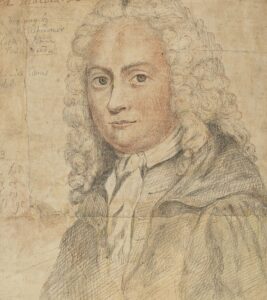 The early 18th century was a time of mathematical rivalry between Sir Isaac Newton’s followers in Britain and Leibniz’s on the Continent. Maclaurin stood firmly in the Newtonian camp, dedicating his career to defending and developing Newton’s method of fluxions — the precursor to modern calculus. His magnum opus, A Treatise of Fluxions (1742), provided the first rigorous, systematic account of Newton’s calculus, written partly to counter the philosophical criticisms of Bishop George Berkeley, who had dismissed fluxions as “the ghosts of departed quantities.”
Maclaurin’s response was both mathematical and philosophical. He sought to ground calculus in geometric reasoning, restoring the spirit of the ancient Greeks while preserving Newton’s analytical power. From this effort emerged the Maclaurin series — a special case of the Taylor series that expands a function around zero. It remains one of the most elegant and enduring tools in analysis.
Key contributions
Maclaurin’s achievements stretch across mathematics and physics:
-
Maclaurin Series — A fundamental expansion that allows functions to be expressed as infinite sums, forming the basis for countless modern applications.
-
Maclaurin Spheroid — A model describing the shape of rotating celestial bodies, such as planets flattened at the poles by their own rotation.
-
Euler–Maclaurin Formula — A bridge between summation and integration, foundational in numerical analysis.
-
Maclaurin’s Inequality — A deep relation between arithmetic and geometric means, still studied in mathematical theory.
-
Geometria Organica (1720) — His early work on the geometry of higher-order curves, advancing classical geometry into new territory.
He also applied mathematics to practical problems, including the study of life annuities and insurance — an early step toward actuarial science.
Civic duty and decline
When the Jacobite rising of 1745 reached Edinburgh, Maclaurin helped organise the city’s defences against the advancing Highland army. The strain of the episode took a toll on his health. Forced to flee to York after Edinburgh’s fall, he never fully recovered. He died in 1746, at the age of forty-eight, leaving behind a legacy far larger than his short life might suggest.
Legacy
Colin Maclaurin bridged the gap between the geometric rigor of the ancients and the emerging analytical techniques of modern science. He was among the first to bring genuine philosophical depth to Newtonian mathematics, grounding it not only in symbols but in reason and intuition. His work anticipated much of the precision that would later define the Enlightenment in Scotland — and his influence can still be felt wherever calculus and analysis are taught.
Maclaurin reminds us that mathematical truth is not just a matter of calculation but of imagination, discipline, and humanity. In his short life, he embodied all three.
Reading List
-
A Treatise of Fluxions (1742) – Colin Maclaurin
-
Geometria Organica (1720) – Colin Maclaurin
-
The Analyst (1734) – George Berkeley (for the philosophical background to Maclaurin’s response)
-
The Scottish Enlightenment: The Scots’ Invention of the Modern World – Arthur Herman
-
A History of Mathematics – Carl B. Boyer and Uta C. Merzbach
Further Information
- MacTutor History of Mathematics – Colin Maclaurin University of St Andrews’ comprehensive biography covering his life, works, and influence.
- Encyclopaedia Britannica: Colin Maclaurin A concise summary of his mathematical contributions and historical context.
- Wikipedia: Colin Maclaurin General overview including timeline, academic posts, and related theorems.
- National Library of Scotland – Rare Books Catalogue Original copies and facsimiles of A Treatise of Fluxions and Geometria Organica.
Image Attribution:
David Steuart Erskine, Public domain, via Wikimedia Commons




.jpg)